Andrew's blog
Multitool prototype ideas II
I continue to try new things.
Plinker / reed support
Universal reed wrench (hands free!)
Tuning support for both raising and lowering the pitch
Embossing point
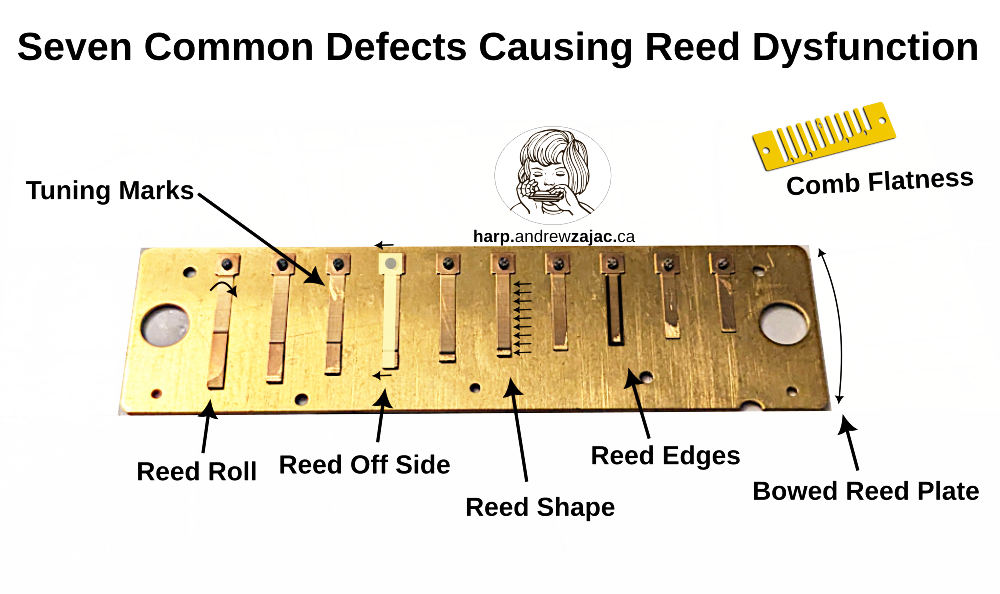
Flatness reference for reed plates
Custom harmonica played for YEARS is in perfect tune
This is a harmonica I customized several years ago that was sent in for service.
It is evident that it is well played. Before I did anything to it, I assessed it. The draw chord was still in perfect tuning.
Why is that?
Tuning tips using my reed support tool/Plinker and a Swiss file
Here's a realistic video showing raising a reed a semitone and lowering another reed a semitone.
With good technique, you will not change the shape of the reed. This is important because we don't want to undo our work. You can't do reed work and change the shape of a reed without affecting the tuning. So after reed work, you must let the reed settle and then correct the tuning. If you bent the reed out of shape when you tuned it, you'd be stuck in a never ending loop of working against yourself.
Flatness is fundamental (Black Combs)
After being flattened by hand, my combs sometimes stick together and are ridiculously hard to pull apart. I'm serious. This is a problem that slows me down as I produce these combs.
The available space between two of my Black combs is almost zero. The water in between finds its way into microscopic gaps. With only a potential space between the two combs, atmospheric pressure creates a vacuum between both combs on top of the adhesive and cohesive forces.
Flatness is fundamental. It's the foundation of a loud, powerful instrument.
New combs for 2026
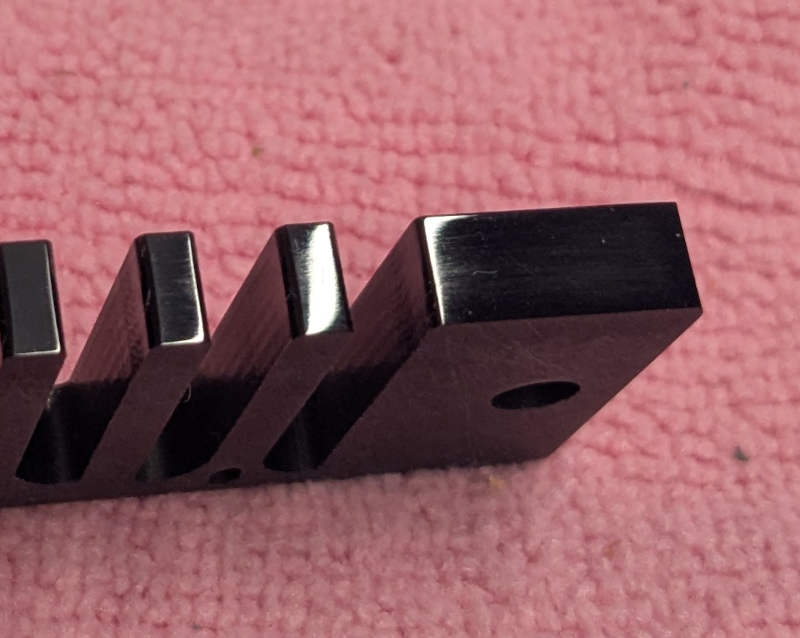
Things are tough all over. Inflation has pushed costs up across the board, and with U.S. tariffs and ongoing supply chain challenges, I can no longer offer Dark combs made from recycled paper and natural resin as a standalone retail product.
Dark combs will continue to be available as part of my custom harmonicas.
There’s no mystery left in custom harmonicas
 Diatonic harmonica customization was much harder when I started because there was so much bad advice.
Adapting to changes in trade and imports
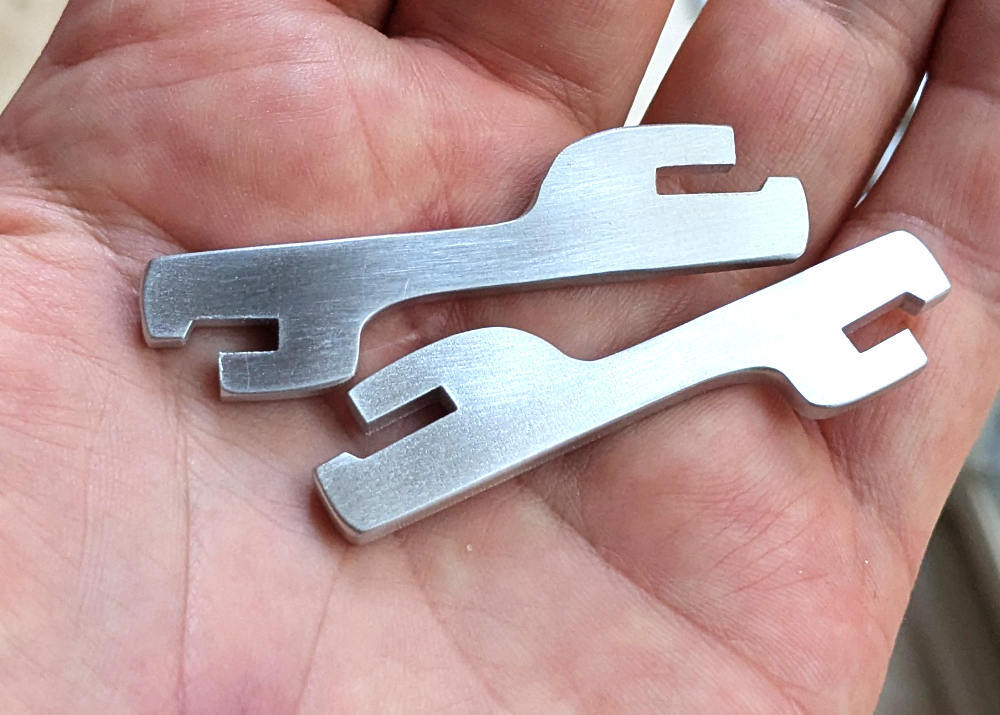
Thanks to U.S. trade policy changes -> "trump tariffs", lol - using certain materials has become unsustainable for small businesses like mine. So I’m making a change.
Some of my tools will now be made of 6061-T6 aluminium. It’s a smart, earth-friendly shift.
What's it like to use an analog Strobe Tuner?
An analog strobe tuner like a Peterson 490, Peterson 450, Peterson 420 or a Conn ST11 all use a rotating strobe disk and light flashing at the frequency of the pitch you are playing to show you what you are hearing. You can see more than one note at a time and you get to see how they are, relative to each other.
You are tuning sound at the speed of light. That's something no other tuner - even the so-called digital strobe tuners can't do. They work at about an interval of 100 milliseconds. That's why the needle or any other form of display is so choppy.
Compact reed plate claws tweak
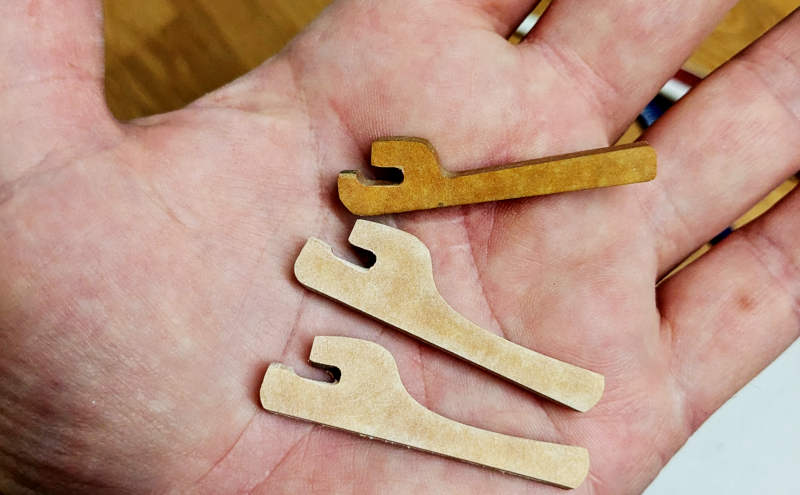 Making both reed plates flat is one of the easiest things you can do to get more power and better control of your harmonica. It's very effective.
All my kits come with some version of the reed plate claws. They are the tools I use to straighten reed plates on my custom harmonicas.
Music makes us human
A cover of my favorite song.
The Hockey Stick (for tuning the harmonica)
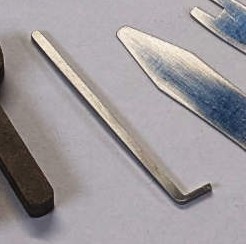 Just about everything you do to a harp affects the tuning so it stands to reason the last thing you should do is adjust the tuning.
But how do you make adjustments to the tuning without messing up the shape of the reeds or undoing other hard-earned adjustments?
To lower the pitch using a file, you can support a blow reed while the reed plate is still on the comb using the Hockey Stick.
(FAQ) Should a rank beginner buy a custom harmonica?
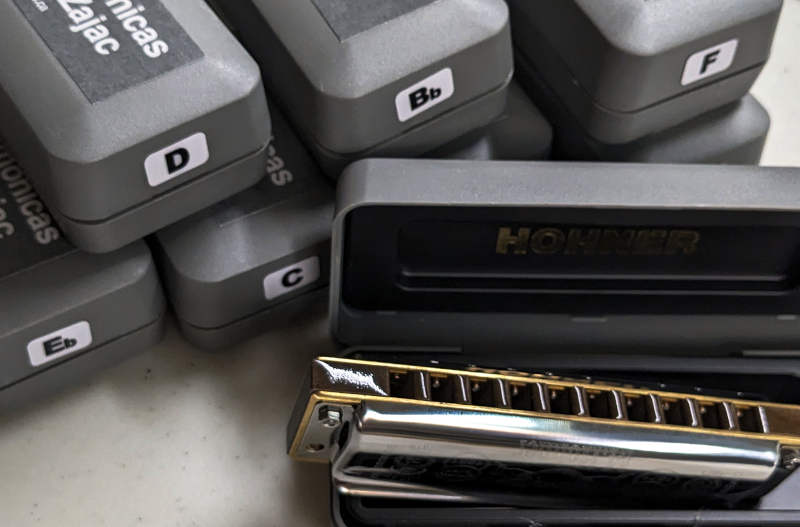 That's a good question. Whether getting a custom harmonica as a rank beginner is a good idea or a bad idea depends on your goals. If you don't really have a clear sense of your goals, then this might be an opportunity to think about them.
A good file for tuning a reed.
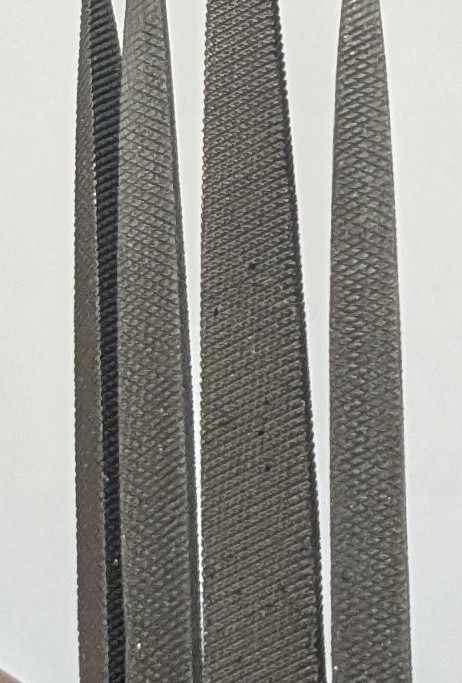 "Recently, the price of Grobet files has exploded. I can't afford to put them in my kits."
A file is my preferred way to tune a harmonica reed. With good support of the underside of the reed, you can raise or lower the pitch by a whole semitone without changing the shape or affecting the performance of the reed.
I've been using 0-cut Grobet files which are Swiss type.
Dark Comb model types
My combs make your instrument comfortable and easy to play. These are the only combs available to have been flattened to my standards.
Models:
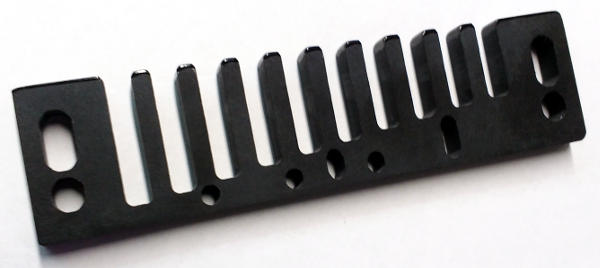 Marine Band
Marine Band Deluxe, Marine Band Crossover and Thunderbird. Also suits Marine Band 1896 harmonicas if you want to change the nails to screws. This includes:
- Marine Band 1896 (1950s to current *).
- Pre-war Marine Bands, including "mouse ear".
- Pre-MS Blues Harps
- Wooden-combed Old Standy.
- Pre-MS Meisterklasse
(*) Marine Band 1896 harmonicas manufactured around the end of the 1980s and beginning of 1990s had a slightly different nail hole pattern and you can chose to only use two screws to hold the plates to the comb or to do a little extra work to create a third hole in the plate. These harps offer much less potential than Hohner harmonicas made before or after this period. I suggest you lower your expectations when trying to upgrade these instruments.
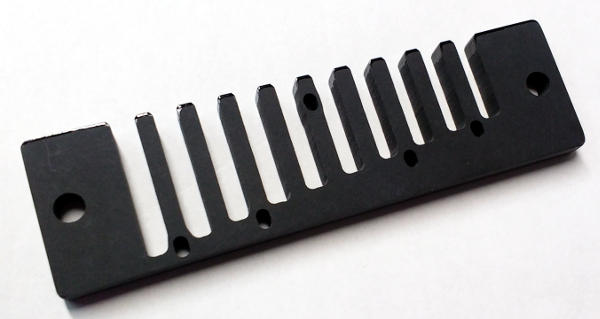 MS Series
Fits the following harps:
Big River
Blues Harp
Crossharp
Proharp
MeisterKlasse
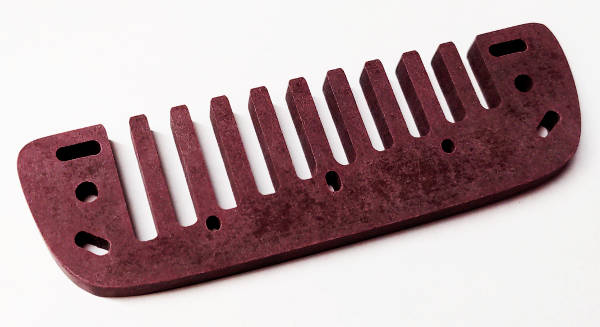 Golden Melody
Fits Golden Melody classic harmonicas
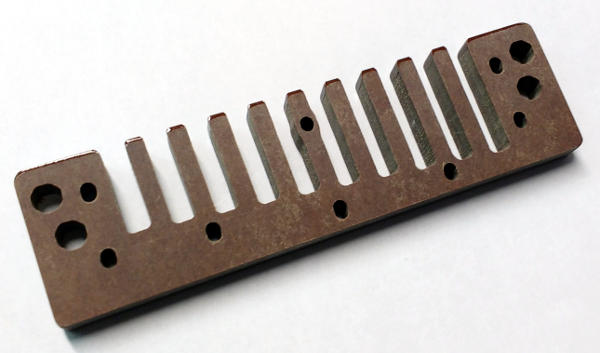 Suzuki
Fits the following harps:
Suzuki Manji, Promaster, Suzuki Olive.
Also fits
- Dabell Contender
- Dabell Noble
- Suzuki HarpMaster, BluesMaster (*)
- Bushman Delta Frost(*)
The stock Manji comb is slightly smaller than the reed plates. My comb is a hair bigger than the plates so that the harp is more comfortable to hold.
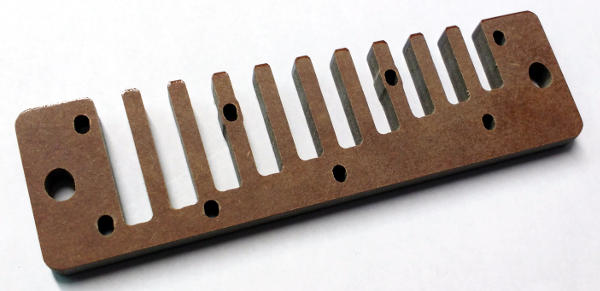 Seydel
Fits Seydel 1847
SOLIST PRO
and
FAVORITE
Order combs HERE.