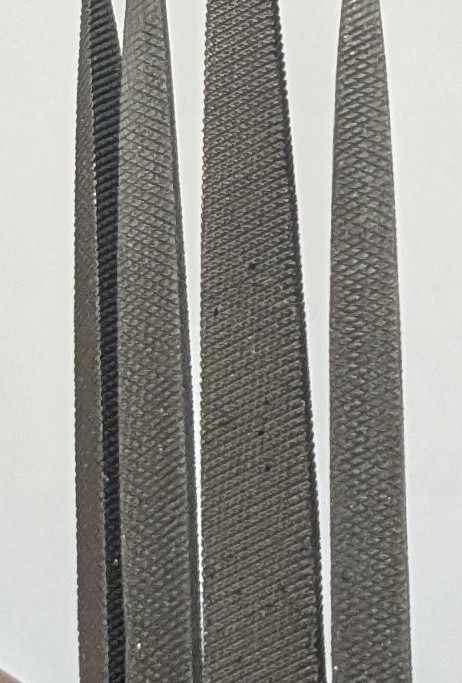
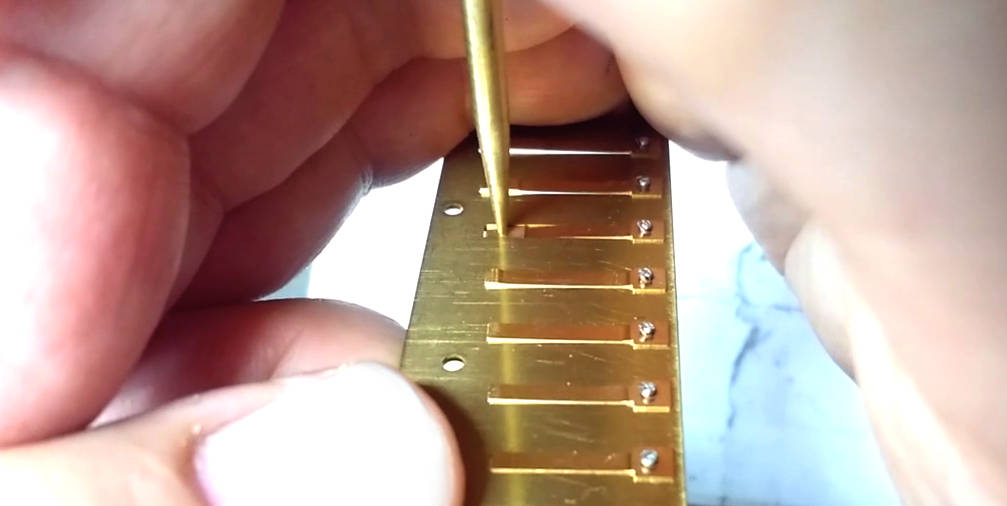
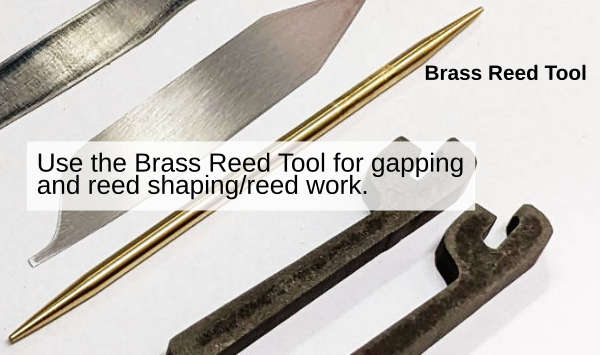
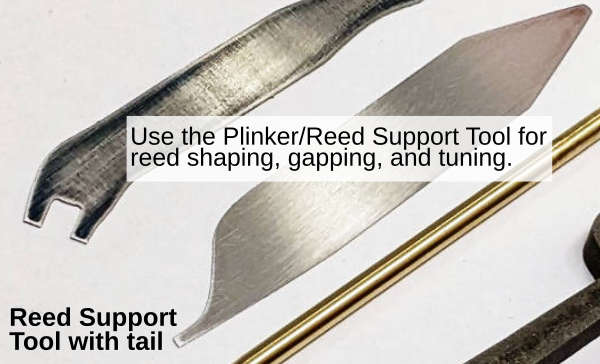
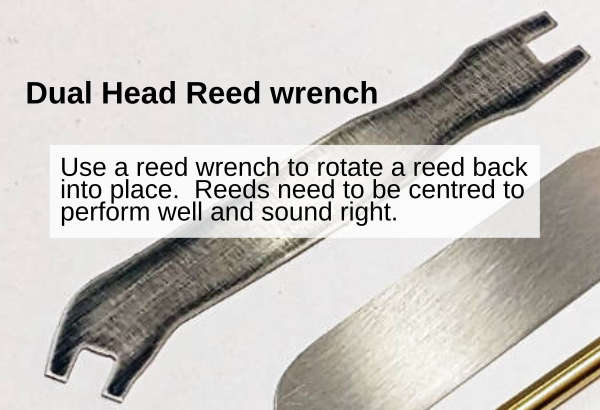
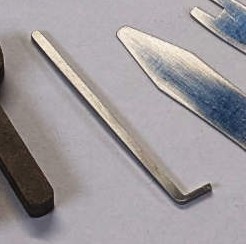
A good file for tuning a reed.
"Recently, the price of Grobet files has exploded. I can't afford to put them in my kits."
A file is my preferred way to tune a harmonica reed. With good support of the underside of the reed, you can raise or lower the pitch by a whole semitone without changing the shape or affecting the performance of the reed.
I've been using 0-cut Grobet files which are Swiss type.
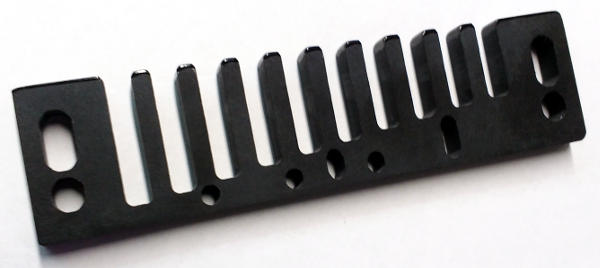
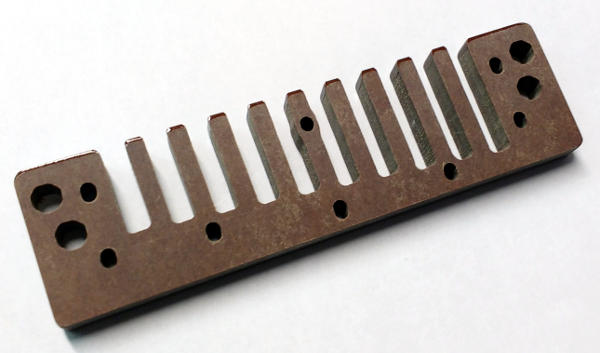
Dark Comb model types
My combs make your instrument comfortable and easy to play. These are the only combs available to have been flattened to my standards.
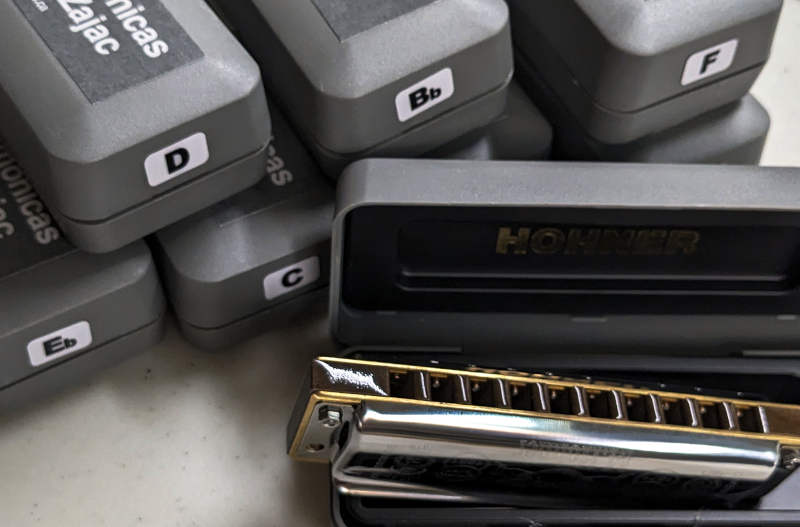
Marine Band Deluxe, Marine Band Crossover and Thunderbird. Also suits Marine Band 1896 harmonicas if you want to change the nails to screws. This includes:
- Marine Band 1896 (1950s to current *).
- Pre-war Marine Bands, including "mouse ear".
- Pre-MS Blues Harps
- Wooden-combed Old Standy.
- Pre-MS Meisterklasse
(*) Marine Band 1896 harmonicas manufactured around the end of the 1980s and beginning of 1990s had a slightly different nail hole pattern and you can chose to only use two screws to hold the plates to the comb or to do a little extra work to create a third hole in the plate. These harps offer much less potential than Hohner harmonicas made before or after this period. I suggest you lower your expectations when trying to upgrade these instruments.
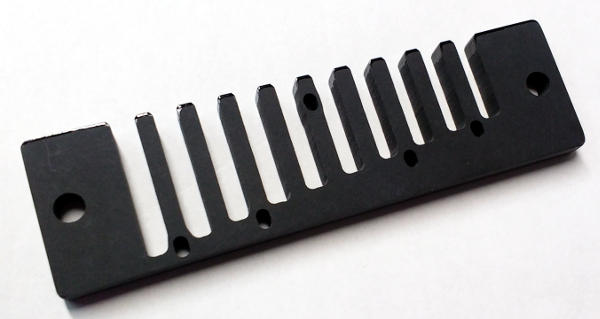
Fits the following harps:
Big River
Blues Harp
Crossharp
Proharp
MeisterKlasse
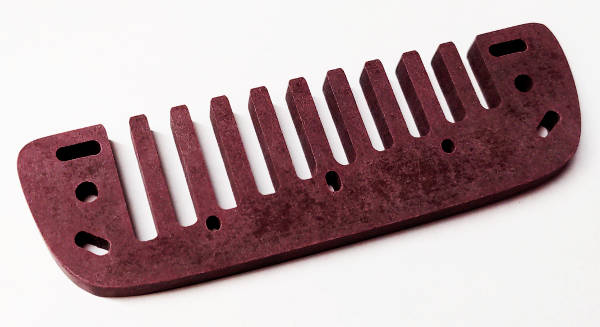
Fits Golden Melody classic harmonicas
Fits the following harps:
Suzuki Manji, Promaster, Suzuki Olive.
Also fits
- Dabell Contender
- Dabell Noble
- Suzuki HarpMaster, BluesMaster (*)
- Bushman Delta Frost(*)
The stock Manji comb is slightly smaller than the reed plates. My comb is a hair bigger than the plates so that the harp is more comfortable to hold.
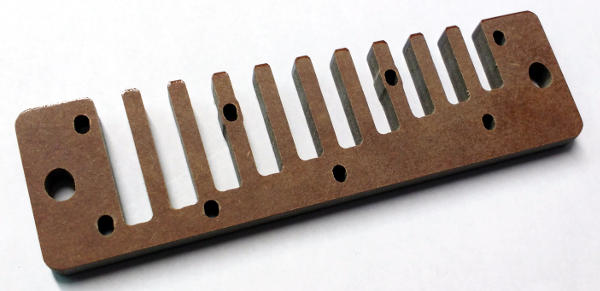
Fits Seydel 1847
SOLIST PRO
and
FAVORITE
Order combs HERE.
"Is there a way to fix it without breaking it or is it just dead?"
Daniel on Facebook asked for help with the nine draw reed. Here is what I would do.
Flat Sanding the draw reed plate for airtightness
This is the simplest thing you can do to any diatonic harmonica to get the most improvement.
Use 220 grit sandpaper and a flat surface. No need to buy a precision surface plate made of granite. Just something very flat. And one quick pass with 220 grit is all you need. More passes and a finer grit will actually make things worse and make the surface round, albeit shiny and polished - which is not what we want.
For more improvement, use one of my Dark combs:
https://harp.andrewzajac.ca/Combs
How to use my Quick Customizing Videos
My Quick Videos are jam packed with all the information you need. Even the intro clip gives you insights that you can't find anywhere else.
All of the customizing concepts I use on my custom harmonicas are covered here. This set is complete.
There is a pdf with extra information and charts you might like to print out and keep handy in your workspace.
The twelve videos run for a total of 31 minutes.

This doesn't mean that you will cover all the material in about a half an hour. Most of the techniques and concepts will take you weeks of practice to learn. You will need to get your hands dirty and do the work.
Everybody learns differently. Some need some step by step and others need to do things for themselves and will only need to get a few hints along the way.
For the player who really doesn't want to have to do any work on their instrument - but we all have to - these videos try to show you what to do so that you can get right back to playing.
For the player who is curious about getting more power and response from their instrument, the more advanced videos show you what you should aim for. You will probably watch some of the videos more than a dozen times as you make progress and gain experience before you have gotten everything they have to offer.
I recently reviewed every video looking for things I could improve. I thought I could update them. But I don't think I can do any better. They still hold up.
They do exactly what they say they do and I think you will get a lot of value from them.
Multi tool: One of the reasons I find it really cool!
Sometimes I solve a problem and that leads to a new standard way of doing things. Here, I show you how I leapfrogged from trying to make a task a bit faster and more convenient and discovered how the new method was also better and more predictable than the old way.
I integrated this change into my Multi tool.
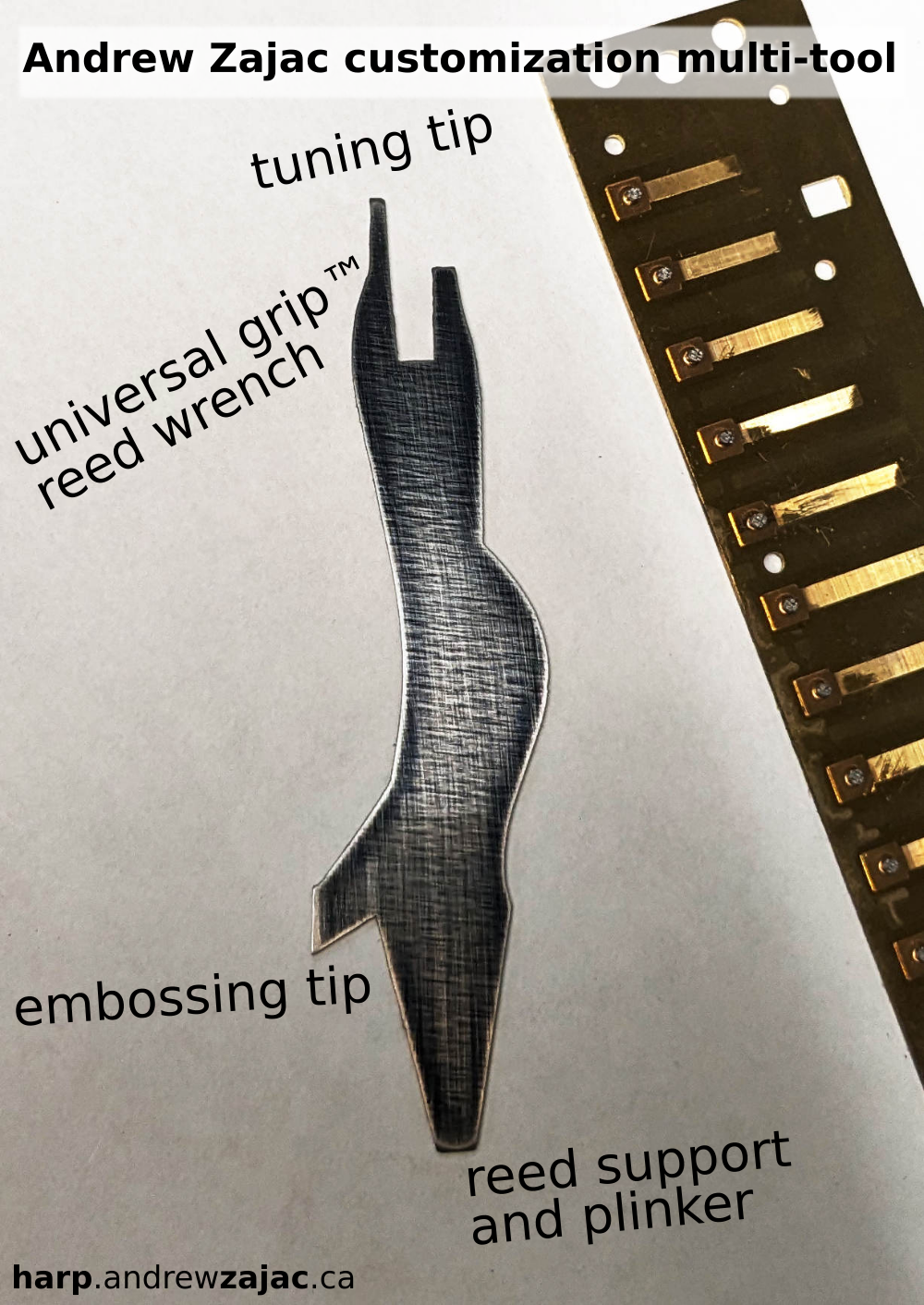
Andrew Zajac customization multi-tool

An intuitive design makes this tool help you upgrade or customize the inner workings of your harmonica with maximum speed and precision.
Use it for:
Framework
- Help the process of centring the rivet pads on the reed plate
- Embossing
Reed work
- Use this tool to shape the reeds for optimum response, tone and volume dynamics
Tuning
- Raise the pitch or lower the pitch without affecting the reed shape
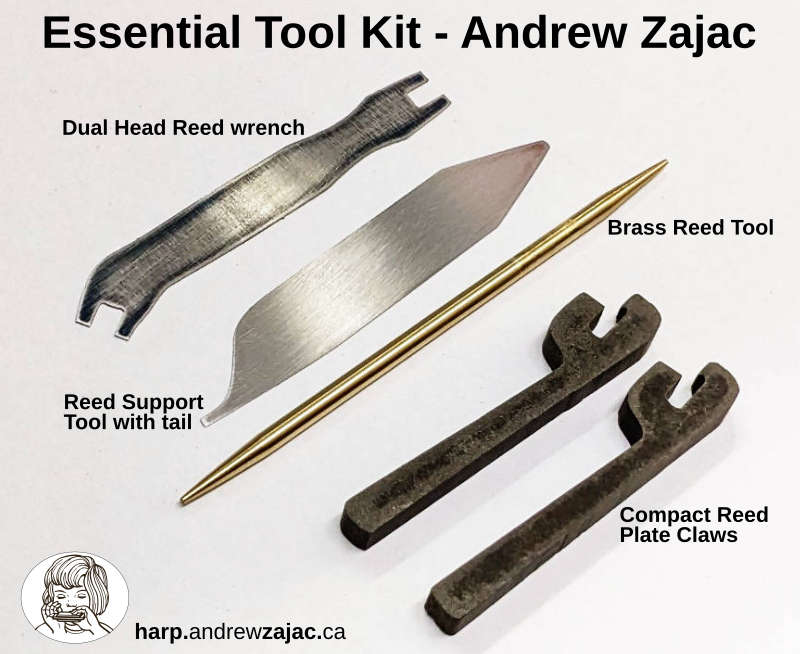
Essential Tool Kit

My tools are expensive!! I put a lot of work into each piece. They are the exact same tools I use on my workbench when I customise harmonicas. I know they work well and will last a long time.
I've added a minimalist kit to my tools so that you can make your own choice about what you need and save some money.
The Essential kit is my Basic Kit with fewer add-ons and it doesn't include the Grobet file.
Tuning is an important aspect of harmonica maintenance but it may be less important to some players. For those folks, I offer a method that uses easily obtainable 120-grit sandpaper to make tuning adjustments using my reed support tool.
As with my other kits, email support is provided with the purchase of these tools. Within the first 90 days of purchase, I will answer any question about using the tools, just email me your questions.
See the Essential Kit page.
__________

__________

__________

__________

Essential Tool Kit

These are the essential tools you need to keep your harmonicas playing well. Use these tools to adjust your harmonicas, correct factory defects to make your instruments more powerful and play more smoothly.
Includes: