(video) Correcting imperfections in just TWO TINES using the Comb Tool™
A Facebook friend posed a question about a wooden comb. Here's my suggestion.
This is a great job for the Comb Tool™.
A Facebook friend posed a question about a wooden comb. Here's my suggestion.
This is a great job for the Comb Tool™.
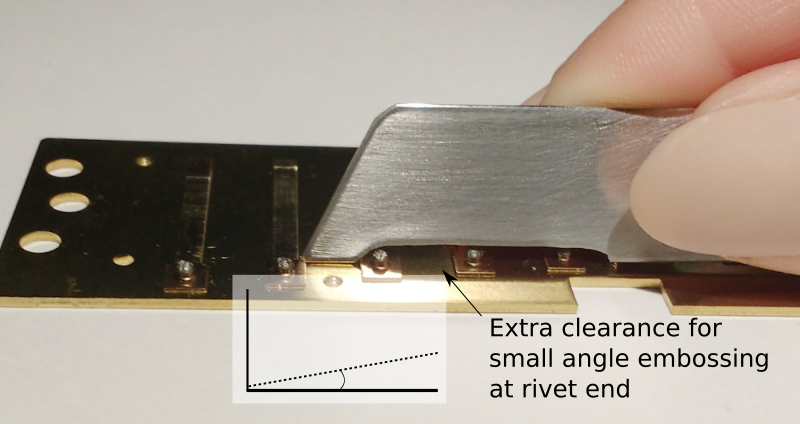
I have improved my embossing tool to provide more flexibility (and safety) at the rivet end. With it, you can emboss with a wide range of angles all along the length of the slot.
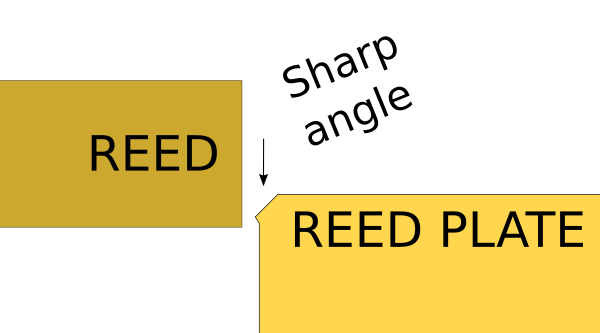
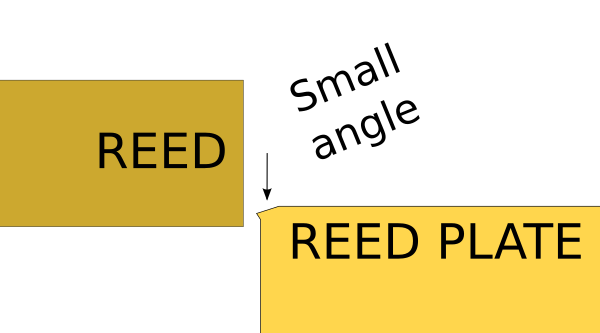
Here is an illustration of what the different angles of embossing look like if you zoom in really close to a cross-section of the slot.
This is embossing at a 45 degree angle:
This is embossing with a smaller angle:
Why is the angle important?
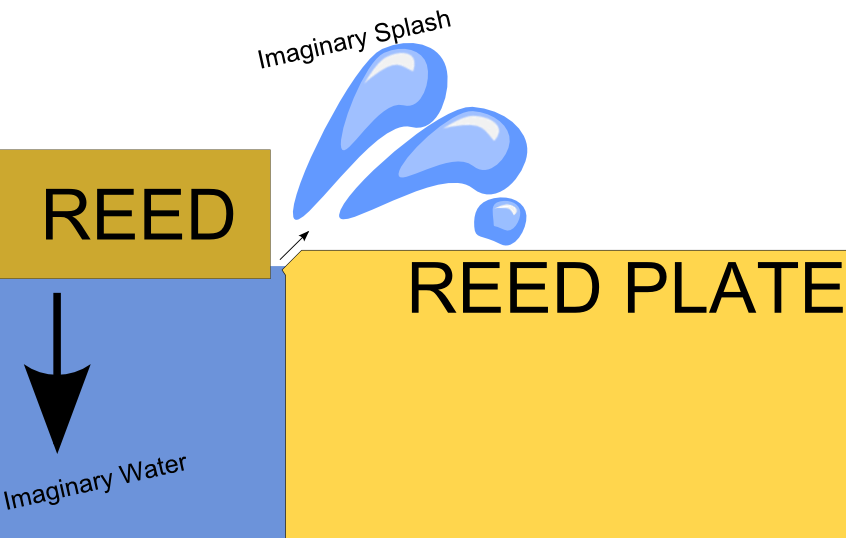
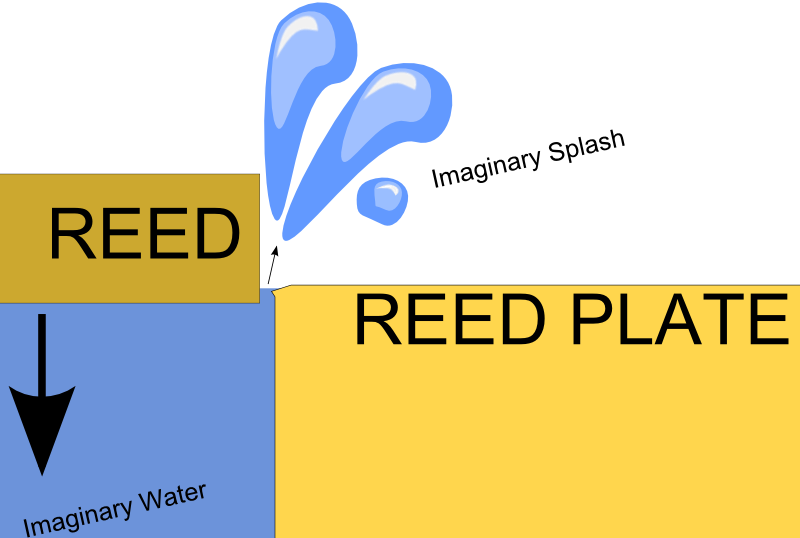
I visualize each slot as a tiny swimming pool. In my model, when the reed hits the water it creates a splash and the angle of the embossed edge can change the direction of the splash.
Here is the reed just before it hits the imaginary water:
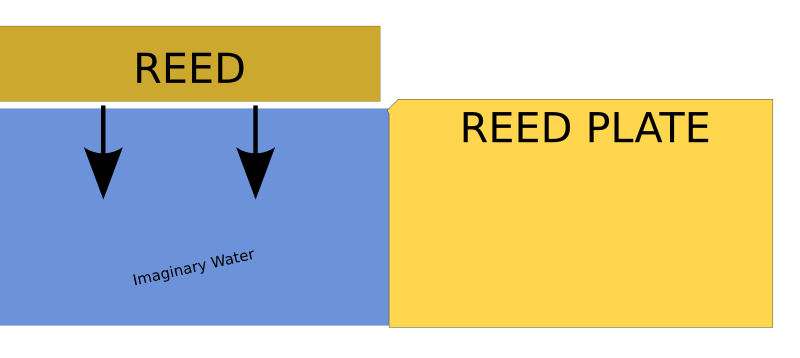
A sharp angle would make the water "splash" further away.
Here the angle of the embossed edge is a lot smaller. A smaller angle would make the water "splash" higher
Different angles can offer different results as far as tone and response. You can use different angles on different portions of the slot. I encourage you to discover what is the best pattern for you.
Did I just ruin my harmonica? In this series I want to cover the most common mistakes and turn them into learning opportunities.
Today I talk about making bends easier. What reed should you adjust to make bends easier?
Both reeds simultaneously participate in draw bends on holes 1-6 and blow bends on holes 7-10.
Would you like me to make a video about your "best" mistake? Contact me and let me know your ideas!
Did I just ruin my harmonica? In this series I want to cover the most common mistakes and turn them into learning opportunities.
Today I talk about trying to tune a harmonica using the numbers from a tuner.
Would you like me to make a video about your "best" mistake? Contact me and let me know your ideas!
Did I just ruin my harmonica? In this series I want to cover the most common mistakes and turn them into learning opportunities.
Today I talk about the common misconception that embossing fixes problems like air leaks or makes the reeds play better.
Would you like me to make a video about your "best" mistake? Contact me and let me know your ideas!
Did I just ruin my harmonica? In this series I want to cover the most common mistakes and turn them into learning opportunities.
Today I talk about bending a reed too far.
Would you like me to make a video about your "best" mistake? Contact me and let me know your ideas!
I use checklists. They help me do my work better and faster.
"A checklist is a type of informational job aid used to reduce failure by compensating for potential limits of human memory and attention. It helps to ensure consistency and completeness in carrying out a task." (Wikipedia)
I don't have a checklist for every task I do, I tend to make them up when I realize I keep repeating the same mistake. I also tend to revise some checklists quite often, incorporating new and better ways of doing things - just because I use a checklist doesn't mean I stop thinking. In fact, a checklist helps me come up with new ideas and incorporate them in my practice very easily.
There are two general types of checklists. The first is just a list. For example, you make a list of things you need to pack before going on a trip. Before you leave, you go through the list to make sure you haven't forgotten anything. This is generally called "Do - Confirm"
The second type is generally called "Read - Do" and it breaks down the steps of a task. It's meant to be read in sequence and each step of the task is performed before you move on to the next step.
I will be publishing some checklists in the coming weeks right here on my website. I hope you find them useful!
I won't publish every checklist I use. But I may make up some new ones to help those who prefer having a written guide when they try out a new task for the first time.
Alcohol will wear down the tips of the tines of my combs but there are a few other reasons not to use it as part of harmonica maintenance.
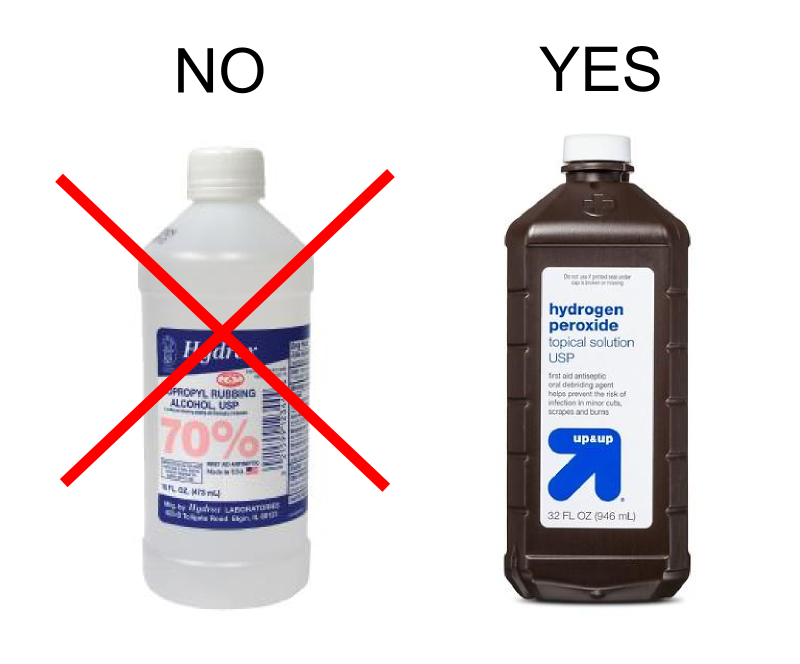
I spent a big part of my career working in an operating room or ICU as a Respiratory Therapist and Clinical Perfusionist. I'm familiar with asepsis and sterile techniques. Here's my take on cleaning versus trying to kill microorganisms in the harmonica.
While 70 per cent alcohol is effective at cleaning off thermometers and stethoscopes, it is not idea for disinfecting a harmonica. Alcohol is very volatile and evaporates quickly - anything less than 70 per cent concentration will not be effective. And if sprayed as a mist (for example, Mi-T-Mist), you cannot assure that a high enough concentration of alcohol will actually reach the target since most of it will evaporate in transit.
There are too many nooks and crannies in a harmonica for alcohol to work. Not to mention a porous comb will shelter microorganisms from some products.
Alcohol will not kill organisms caught under debris so to reach all the bugs, each piece of the harp must be cleaned first. But if you clean the harp well, there is no real need to sterilize.
I only think about sterilizing a harp if I am worried about a specific pathogen, example someone with active cold sores played my harp.
Instead, I recommend soap and water. My combs do not swell. You can dunk the whole harp with my comb under soapy water and slosh it around. Rinse it out, tap out the excess water and let it dry. You can use a hair dryer to warm up the inside of the harp to dry it out faster.
If you need to disinfect in addition to cleaning, I recommend hydrogen peroxide. It is inexpensive, non-toxic and earth-friendly: it breaks down into oxygen and water.
The process of installing a new comb is straightforward.
My combs maximize surface contact and do not incorporate room for the tips of the rivets that stick out on the under side of the reed plate. You need to flat sand the draw plate to install my combs. Flat sanding the draw plate is easy and it provides an additional boost to the performance of any diatonic harmonica. Try it on a harp with its stock comb and see.
Here is the process of flat sanding:
Here's a video of the whole procedure:

After years of hard work, I am humbled to have gotten the news from Joe Filisko this morning:
"I'm happy to say that Andrew Zajac has PASSED the rigorous tests and is now officially part of the Hohner Affiliated Customizer Program."
Thank you so much, Joe!
This is only the beginning - I intend to work just as hard and continuously strive to produce a better harp.
Copyright © 2026 Andrew Zajac - All rights reserved